How to Generate Real Estate Leads in Mangalore: A Practical Guide for Builders & Property Developers
Most Mangalore builders still rely on word-of-mouth and generic portal listings. Here's how to actually build a lead engine — including a K-RERA compliance detail most campaigns get wrong.
Introduction
Mangalore's real estate market has changed meaningfully over the past few years. Low-density gated communities in Kadri and Bejai are appreciating faster than large-scale developments, sea-facing apartments near Mannagudda continue to draw serious NRI interest, and buyer expectations around sustainability and builder transparency have risen sharply.
What hasn't kept pace, for many local builders, is how leads actually get generated. A lot of projects still lean heavily on word-of-mouth, a basic listing on one or two property portals, and whatever walk-in traffic a site office attracts. Meanwhile, buyers — especially the Gulf-connected NRI segment that makes up a significant share of Mangalore's serious buyers — are researching almost entirely online before they ever contact a builder directly. This guide covers what actually works for generating real estate leads in Mangalore in 2026, including a compliance detail that catches more builders out than most people realise.
Why Lead Generation Looks Different in Mangalore Than in Metro Markets
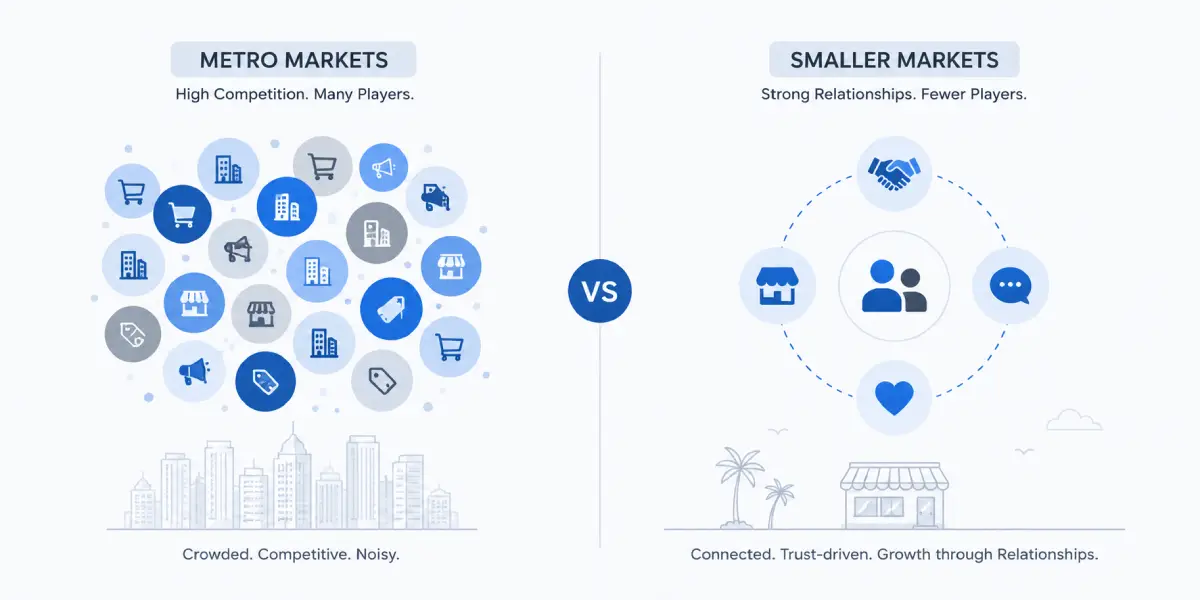
Lower Competition, Lower Cost Per Lead — But Also a Smaller, More Relationship-Driven Buyer Pool
National real estate marketing content is overwhelmingly written for Mumbai, Bangalore, Gurgaon, and Delhi NCR — markets where dozens of builders bid against each other for the same keywords, pushing costs up significantly. Mangalore's ad auction environment is far less competitive, which generally means lower cost per lead. But the buyer pool is also smaller and more relationship-driven; a generic, high-volume metro playbook doesn't translate directly.
The NRI Factor — a Genuinely Distinct Audience Most National Playbooks Ignore
Mangalore has one of India's largest Gulf-connected NRI populations, along with meaningful demand from NRIs in the UK, Canada, and Australia. This is not a small niche — it's a core part of the serious buyer pool for many projects, and it behaves differently from a local, walk-in buyer. NRI buyers typically can't visit a site repeatedly during construction, research remotely over weeks or months, and — according to current industry analysis — prioritise builder reliability above almost any other factor, precisely because they can't personally monitor construction progress. A lead generation strategy that treats every enquiry the same way misses this distinction.
The Compliance Step Most Builders Get Wrong Before They Even Start Advertising
K-RERA Registration Must Come Before Any Marketing, Not Alongside It
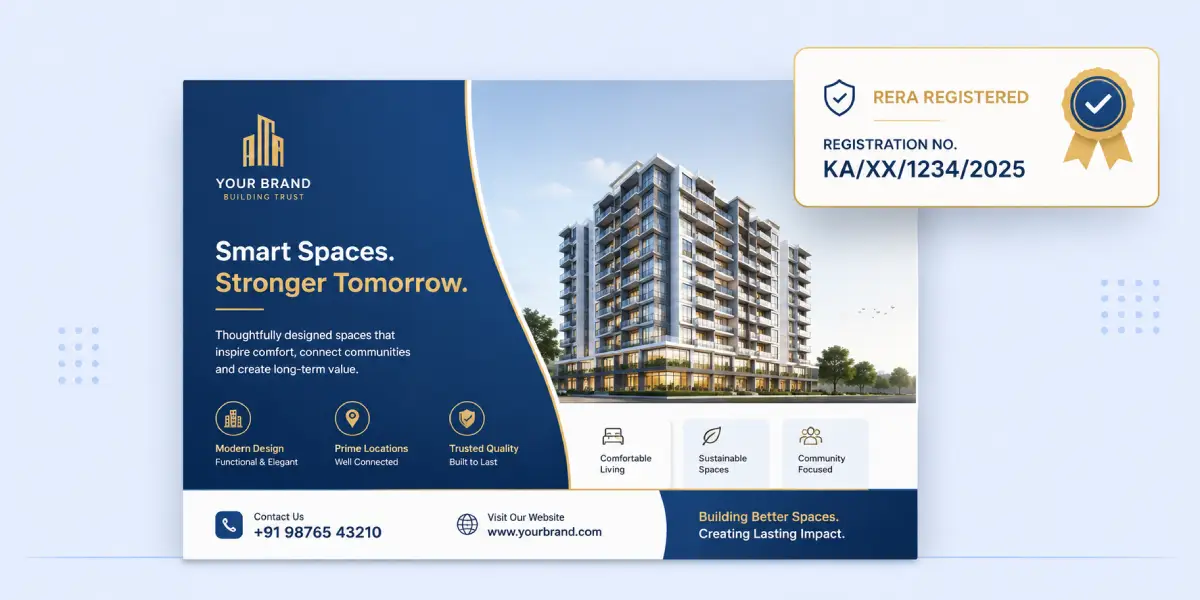
Under the Karnataka Real Estate Regulatory Authority (K-RERA), any project covering more than 500 square metres or with more than 8 units must be registered before any advertising, marketing, or sale activity begins — not registered "in parallel" with an early marketing push, which is a mistake some builders make when trying to generate interest ahead of formal launch. This applies to Google Ads, Meta campaigns, portal listings, and even social media posts, not just print material.
The Specific Advertisement Display Rule Almost Nobody Follows Correctly
This is the detail most digital marketing content misses entirely: K-RERA rules specifically require that the registration number appear in every advertisement, and for print, hoardings, or other visual media, it must be placed in the top-right corner with a font size no smaller than the project name itself. Many builders display a RERA number somewhere on their website but never think to check whether their Google or Meta ad creative technically complies with these placement and sizing requirements. Beyond the legal risk, there's a practical business reason to get this right: banks increasingly check K-RERA registration status during home loan technical evaluation, so non-compliance can quietly cost you financed buyers at the loan-approval stage, well after the lead itself looked promising. We are not lawyers, and this is not legal advice — confirm your specific compliance obligations directly with K-RERA or a qualified legal advisor.
| Requirement | What It Means for Your Campaigns |
|---|---|
| Registration before advertising | No Google Ads, Meta campaigns, or portal listings until K-RERA registration is complete |
| Registration number in every advertisement | Applies to digital ads, not just print and hoardings |
| Top-right placement, minimum font size (visual media) | Check your ad creative templates specifically, not just your website |
| Agents and brokers separately registered | Confirm any broker partners are properly K-RERA registered too |
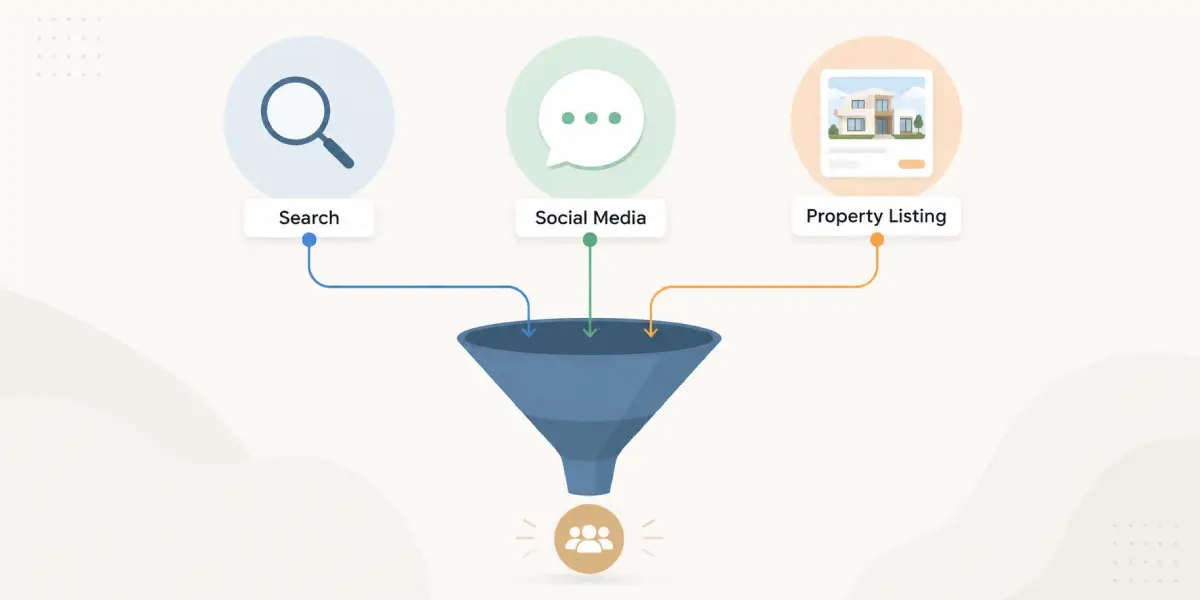
The Channel Mix That Actually Works — Google, Meta, and Portals
Why Google Search Should Be Your Highest-Intent Channel, Not Your Only One
An estimated 97% of Indian property buyers now start their search on Google rather than going directly to a property portal, and organic search traffic reportedly converts roughly eight times better than paid traffic for real estate, since buyers trust organic search results more than ads. This makes both Google Ads (for immediate, high-intent capture) and real estate SEO (for a channel you genuinely own long-term) worth investing in together, rather than treating either as optional.
Meta Ads for Awareness and Top-of-Funnel Discovery
Meta (Facebook and Instagram) ads work differently — they interrupt scrollers rather than capture active searchers, which generally means lower cost per lead but also lower immediate intent. They're genuinely effective for building initial project awareness and generating volume, provided your follow-up process is strong enough to nurture lower-intent leads toward an actual site visit.
Property Portals — Run Several, Track Cost Per Closing, Not Portal Reputation
99acres, MagicBricks, and Housing.com each perform differently depending on city and segment, and there's no single portal that reliably outperforms across every market. The more useful approach is running multiple portals simultaneously and tracking which one actually produces closings for your specific project, rather than assuming one portal's national reputation will hold true in Mangalore specifically.
Marketing to NRI Buyers Specifically
Why Builder Reliability, Not Price, Is the Deciding Factor for Gulf NRI Buyers
For NRI buyers who can't personally monitor construction progress, builder track record and transparency tend to outweigh price sensitivity in the decision process. Marketing content aimed at this segment should lean into verifiable credibility — years in business, completed project history, K-RERA registration status clearly displayed, and honest communication about timelines — rather than purely price-led messaging that works better with local, price-comparing buyers.
Virtual Tours and Video Content as Trust-Building Tools for Buyers Who Can't Visit in Person
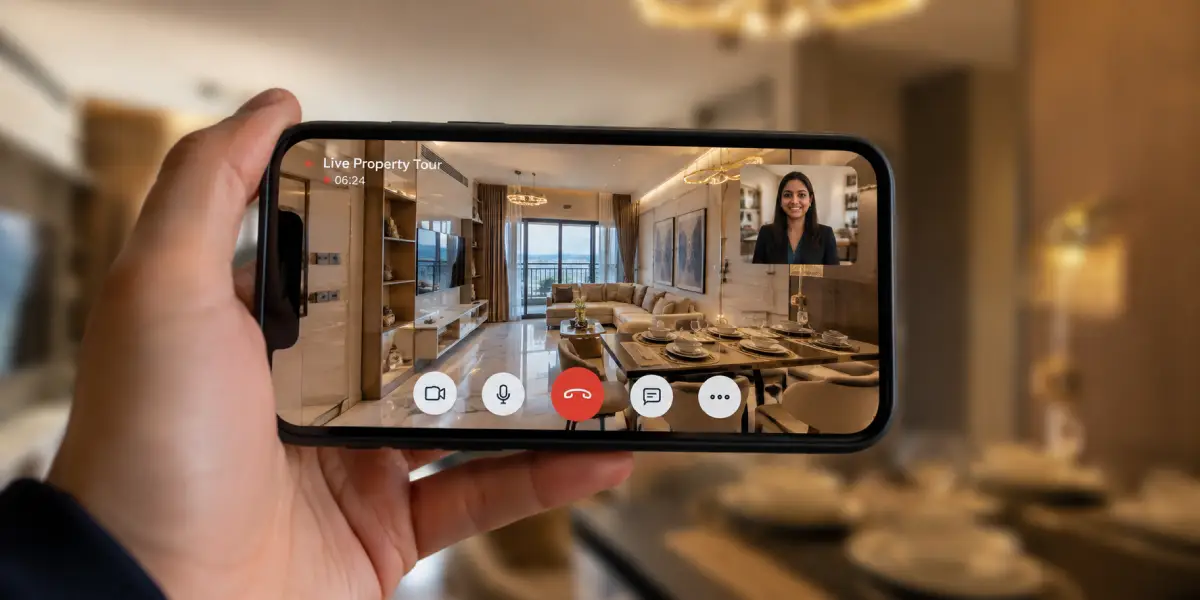
Since a large share of NRI buyers can't visit a site regularly, video walkthroughs, regular construction progress updates, and virtual tours do meaningful work that a static photo listing can't. This content also travels well on WhatsApp, which remains a natural channel for ongoing communication with buyers managing a purchase remotely across time zones.
What Leads Should Actually Cost You in Mangalore
National cost-per-lead data varies enormously by city tier and property segment. Mangalore, as a tier-2 market with meaningfully less ad auction competition than Mumbai, Bangalore, or Delhi NCR, should generally land toward the lower end of national ranges — though I haven't found Mangalore-specific published benchmarks, so treat the figures below as a reasonable national tier-2 reference point rather than a confirmed local number.
| Channel | Approx. CPL Range (Tier-2 Context) | Best For |
|---|---|---|
| Google Search Ads | ₹150 – ₹600 | High-intent buyers actively searching for a project or locality |
| Meta Ads (Facebook/Instagram) | ₹200 – ₹400 | Awareness and top-of-funnel discovery, higher volume |
| Property portals | Varies by portal and package | Buyers actively comparing multiple projects |
| Organic SEO (long-term) | No direct per-lead cost, but requires ongoing investment | Building a channel you own, with reportedly higher conversion rates than paid traffic |
A reasonable starting monthly budget for a small to mid-size project's digital marketing — spanning Google Ads, Meta Ads, and basic SEO — typically falls somewhere between ₹30,000 and ₹1,50,000 depending on project scale and competition, based on current industry figures.
The Metric That Matters More Than Cost Per Lead
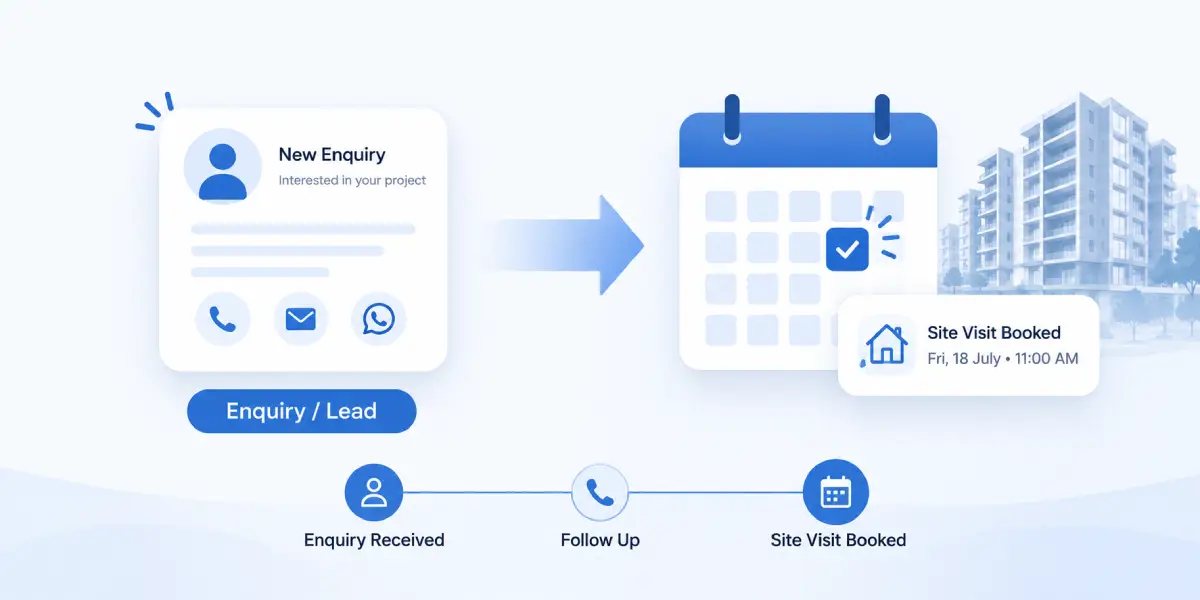
Cost Per Booked, Attended Site Visit
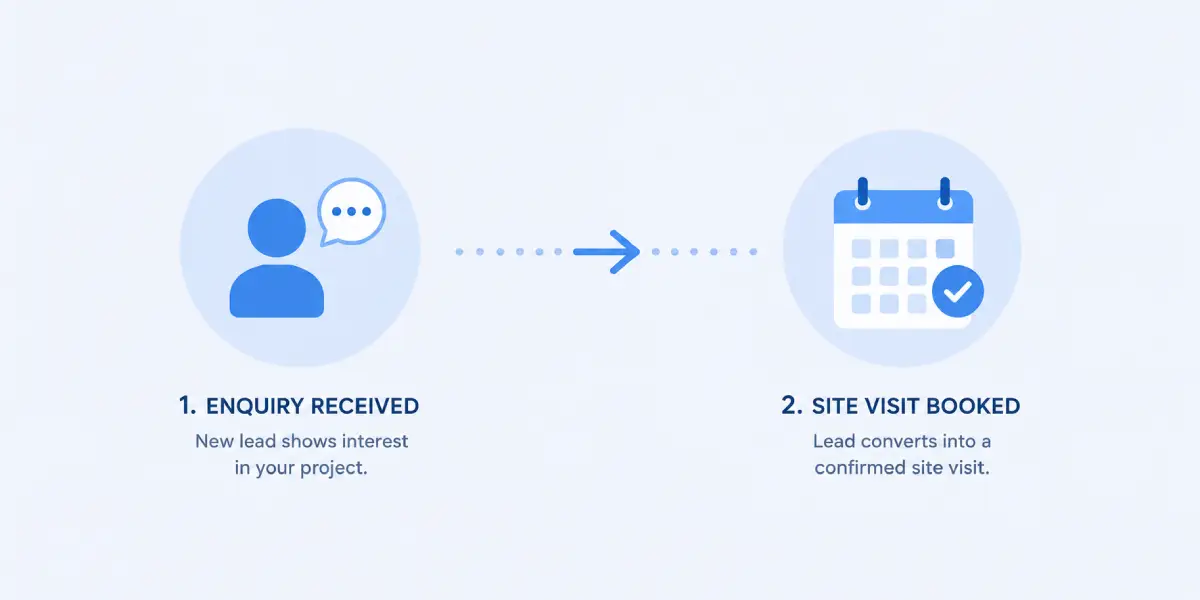
This is arguably the single most important reframe in real estate lead generation: cost per lead is a vanity metric. A developer generating 600 cheap leads a month isn't necessarily doing better than one generating 120 more expensive leads, because the number that actually drives revenue is site visits booked and, ultimately, units sold — not raw lead count. A ₹200 lead that never gets followed up is worse than a ₹600 lead that becomes a booked, attended visit.
Why a Slower CRM Follow-Up System Quietly Kills Good Leads
Many builders spend meaningfully on lead generation and then let those leads sit in a shared inbox or WhatsApp number with no structured follow-up. A basic CRM with clear ownership, response time tracking, and automated reminders often produces a bigger improvement in actual bookings than increasing ad spend — the leads were already there; they just weren't being converted.
Positioning Your Project Around What Mangalore Buyers Actually Want in 2026
Low-Density Gated Communities and Locality-Specific Messaging
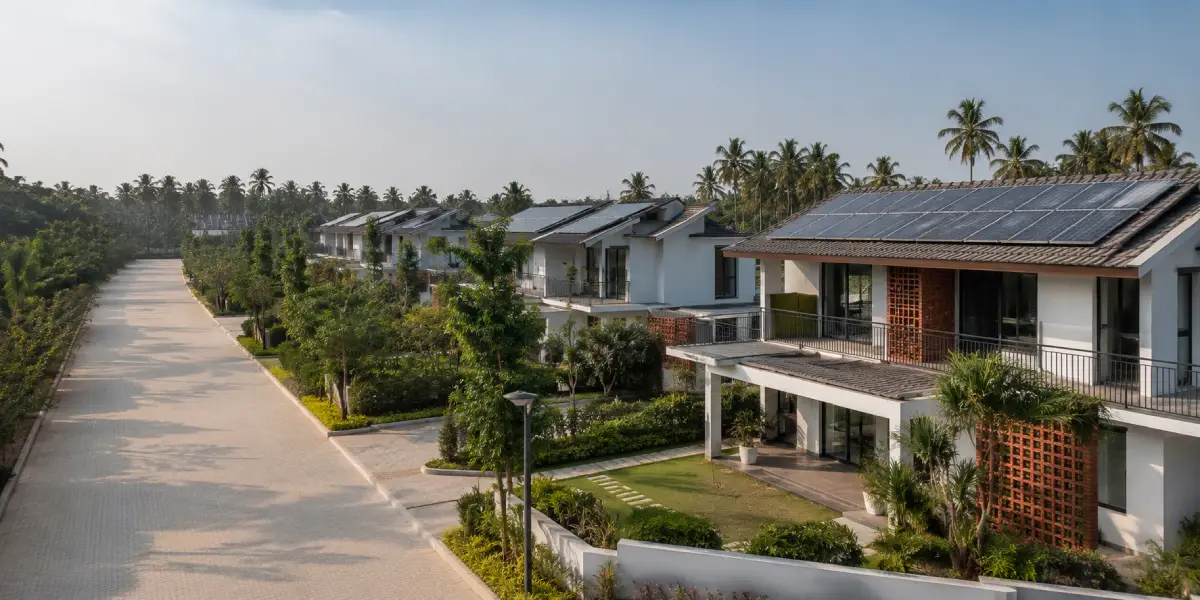
Land scarcity in established localities like Kadri and Bejai has pushed a genuine trend toward smaller, low-density gated communities (roughly 20 to 80 units) over large high-rises, with these projects reportedly appreciating 12 to 18% annually in some cases, since once a limited development sells out, similar options in the same area simply don't exist. If your project fits this profile, this is worth leading with in your marketing rather than burying it — it's a genuine differentiator, not generic copy.
Sustainability Features as a Genuine Selling Point, Not Just Marketing Copy
Features like rainwater harvesting, solar lighting, energy-efficient fittings, and EV charging points are increasingly real decision factors for buyers, particularly younger buyers and NRIs evaluating long-term value, not just environmental marketing language. If your project includes these, make them specific and visible in your campaigns rather than a vague line item in a brochure.
The builders pulling ahead in Mangalore's 2026 market aren't necessarily spending the most on ads — they're the ones with K-RERA-compliant campaigns, a genuine multi-channel presence, and a follow-up system that actually converts the leads they're already generating.
A Practical Lead Generation Checklist for Builders
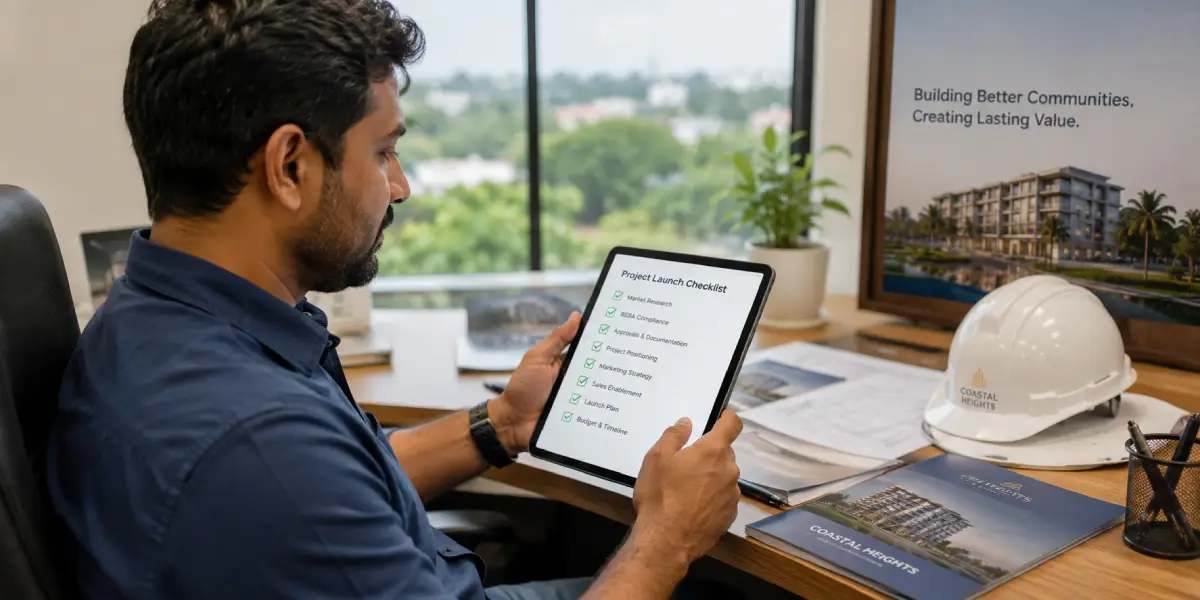
- Confirm K-RERA registration is complete before any marketing activity begins, including social media posts.
- Audit your ad creative — Google, Meta, and print — for correct RERA number placement and font size.
- Run Google Search Ads and organic SEO together, not one instead of the other.
- List on multiple property portals and track cost per closing, not just portal reputation.
- Build NRI-specific content — video walkthroughs, transparent progress updates — if that's a meaningful part of your buyer pool.
- Set up basic CRM tracking so no lead sits unfollowed for more than a day.
- Lead your marketing with genuine differentiators — low-density status, specific sustainability features — rather than generic claims.
How NammoraX Can Help
We help builders and developers across Mangaluru and Coastal Karnataka build digital marketing campaigns that generate genuine, followed-up leads — not just cheap ones. This includes K-RERA-compliant ad creative, Google and Meta campaign management, and local SEO that builds a channel you actually own over time rather than renting attention on every campaign.
Since we're based in Mangaluru ourselves, we understand the specific NRI buyer dynamics and locality-level positioning that generic national real estate marketing content simply doesn't account for.
About NammoraX
NammoraX is a digital marketing and web design agency headquartered in Puttur, Dakshina Kannada, Karnataka, serving businesses across Karnataka, Kerala, and internationally. We work with builders, developers, and real estate businesses on digital marketing, local SEO, and campaign management grounded in how buyers in this specific region actually search and decide.
Frequently Asked Questions
Do I need K-RERA registration before I start advertising my project?
Yes. Any project over 500 square metres or with more than 8 units must be K-RERA registered before any advertising, marketing, or sale activity begins, including digital ads and social media posts, not just print material.
What's a realistic cost per lead for a real estate project in Mangalore?
Based on national tier-2 city benchmarks, roughly ₹150–600 on Google Search Ads and ₹200–400 on Meta Ads is a reasonable reference range, though no Mangalore-specific published figure exists. Actual costs depend on your project segment and competition.
How is marketing to NRI buyers different from marketing to local buyers?
NRI buyers typically can't monitor construction in person and tend to prioritise builder reliability and transparency over price. Video walkthroughs, progress updates, and clear K-RERA registration visibility matter more for this segment than for local, walk-in buyers.
Which property portal generates the best leads in Mangalore — 99acres, MagicBricks, or Housing.com?
This varies by city and segment, and there's no single portal proven to dominate in Mangalore specifically. The recommended approach is running several portals simultaneously and tracking cost per closing for your specific project.
Should I focus on Google Ads or Meta Ads first?
Google Ads generally captures higher-intent buyers actively searching, while Meta Ads build broader awareness at typically lower cost per lead but lower immediate intent. Most effective campaigns run both together rather than choosing one exclusively.
Why do I have a lot of leads but few site visits?
This usually points to a follow-up problem rather than a lead-quality problem. Cost per lead is a vanity metric — cost per booked, attended site visit is what actually reflects performance, and a structured CRM with fast response times often fixes this more effectively than increasing ad spend.
Does the K-RERA number need to be on my Google or Meta ads too, or just print?
K-RERA registration number requirements apply to advertisements broadly, not just print and hoardings. It's worth auditing your digital ad creative specifically to confirm compliance, since many builders only check their website and physical signage.