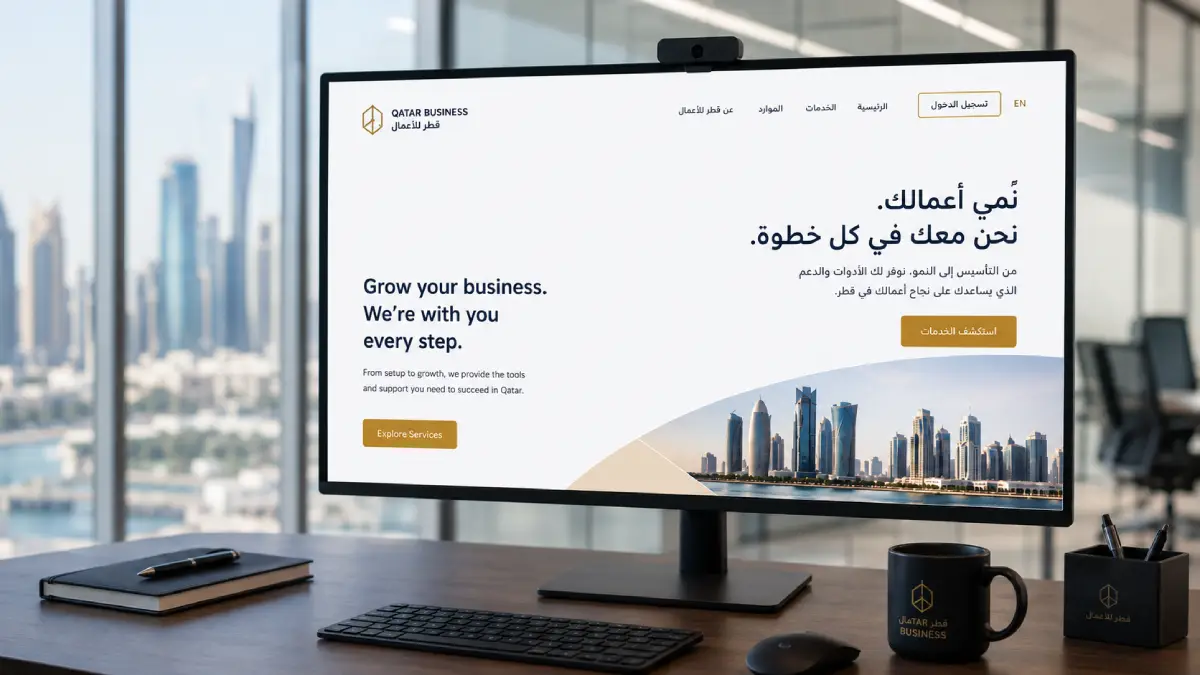
Corporate Website Design Trends in Qatar for 2026
Bold design is trending everywhere in 2026 — but Qatar's corporate sector runs on trust, not spectacle. Here's what actually belongs on a Qatar corporate website this year.
Introduction
Search "web design trends 2026" and you'll find a lot of bold typography, brutalist layouts, and websites that feel more like art installations than business tools. Much of that is genuinely good design — for the right brand. It is rarely the right design for a Doha law firm, a Qatari bank, an engineering consultancy, or a government-adjacent enterprise.
Qatar's corporate sector runs on trust, credibility, and regulatory seriousness. The trends worth adopting this year are not necessarily the flashiest ones — they're the ones that make a corporate website faster, more accessible, more trustworthy, and more legible to both human visitors and AI search tools. This article covers what's actually relevant for a Qatar corporate website in 2026, including a regulatory angle most generic design trend articles miss entirely.

Trust and Security Signals Are Now a Design Trend, Not Just a Backend Concern
What NCSA's Cloud Computing Privacy Assessment Tool Means for Corporate Websites
Qatar's National Cyber Security Agency (NCSA) was established by Amiri Decree No. 1 of 2021 and operates under the direct supervision of the Prime Minister's office, overseeing national cybersecurity policy and enforcing Qatar's Personal Data Privacy Protection Law (PDPPL, Law No. 13 of 2016). In April 2026, NCSA launched a Cloud Computing Privacy Assessment Tool, giving organisations a structured framework to evaluate their privacy governance as cloud adoption accelerates across the country.
For a corporate website, this matters directly. If your site collects enquiries, hosts customer portals, or runs on a cloud-based CMS, the way you handle that data is no longer just a legal formality tucked into a privacy policy page — it's becoming part of how sophisticated Qatar-based clients and partners evaluate whether to trust your business at all.
PDPPL Compliance as a Visible Trust Signal, Not Just a Legal Checkbox
NCSA has also issued Guidelines for Secure Adoption and Usage of Artificial Intelligence, relevant to any corporate site now adding AI chat widgets or automated tools. Separately, the Qatar Cybersecurity Framework (QCF), developed with the National Cyber Security Committee, sets out six components — governance, risk management, protection, detection and response, recovery, and collaboration — that increasingly shape which organisations can win government and enterprise contracts.
A corporate website that clearly and honestly communicates its data handling practices, rather than burying a generic privacy policy nobody reads, is starting to function as a genuine trust signal in Qatar's corporate market — not just a compliance checkbox. We are not lawyers, and this is not legal advice; if you are unsure of your specific PDPPL obligations, confirm directly with NCSA or a qualified legal advisor.
Bilingual Arabic-English Design Remains Non-Negotiable
Why RTL Layout Still Trips Up Corporate Websites in 2026
This isn't a new trend, but it remains one that corporate websites in Qatar consistently get wrong. A properly built Arabic version needs a full right-to-left (RTL) layout — not translated text squeezed into a left-to-right template, which reads as an afterthought to Arabic-speaking visitors, including many of Qatar's most senior corporate decision-makers.
Bilingual design done properly affects more than the homepage. Navigation structure, form fields, PDF documents, and even email confirmation templates need to work correctly in both directions. A corporate website that only got the homepage translated, while every internal page defaults back to English, undermines the professionalism it's trying to project.
Designing for AI Search, Not Just Google
What AEO (Answer Engine Optimization) Actually Means for a Corporate Site
Google AI Overviews, ChatGPT, Perplexity, and similar tools are changing how people find information before they ever click through to a website. Some industry analysis points to organic traffic declines of 15 to 25 percent across several sectors as AI tools summarise answers directly, without sending the visitor to the source site at all.
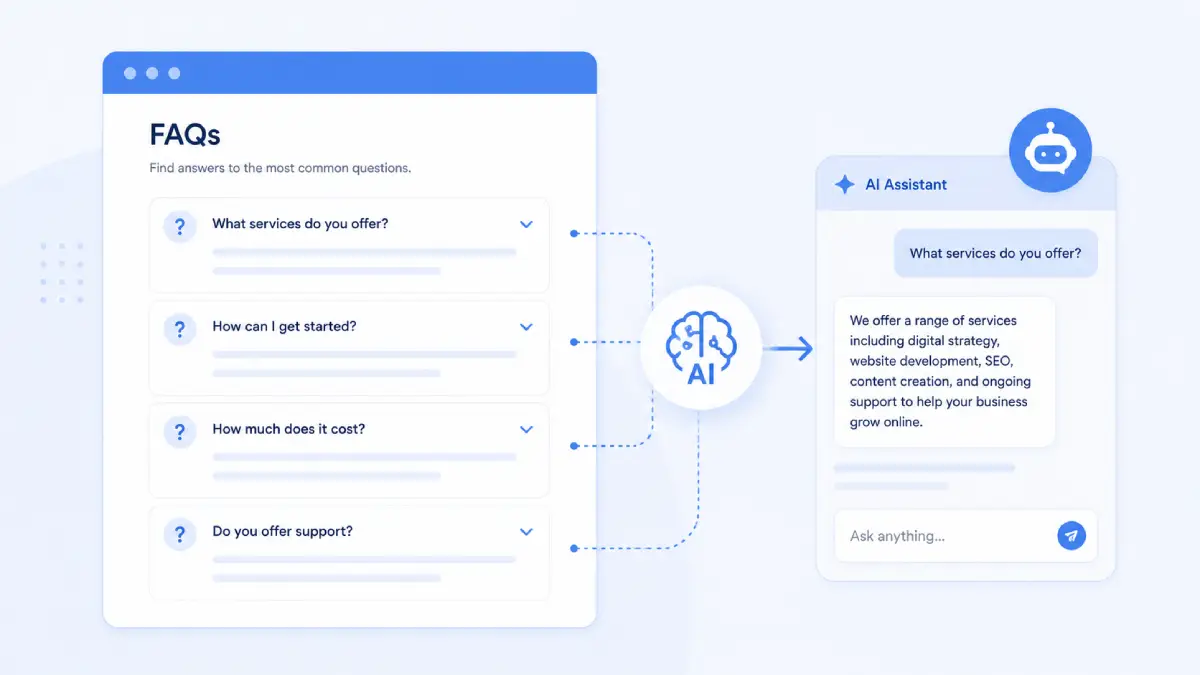
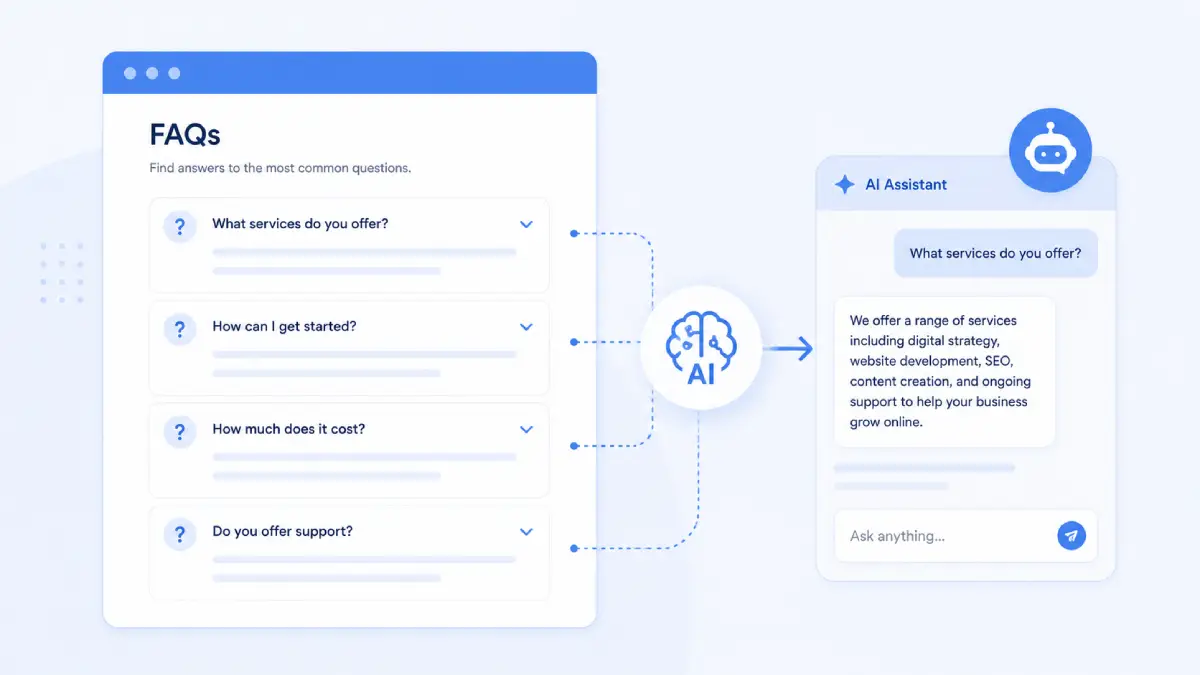
For a corporate website, this means content structure now matters as much as content quality. Clear, direct answers near the top of a page, well-structured FAQ sections, and content organised around genuine questions your clients ask — not just marketing copy — make it more likely that AI tools cite your business accurately when someone asks about your industry or services.
Structured Content, FAQs, and Direct Answers as a Design Requirement
This isn't purely a writing consideration — it's a design one. Pages need clear heading hierarchy, scannable sections, and FAQ blocks that are actually marked up as FAQs, not just styled to look like one. A corporate website redesign in 2026 should treat "can an AI tool understand and accurately summarise this page" as a real design requirement, alongside how it looks to a human visitor.
Bold Design Has a Limit — Especially for Trust-Sector Industries
Where Neo-Brutalism and Kinetic Typography Work, and Where They Don't
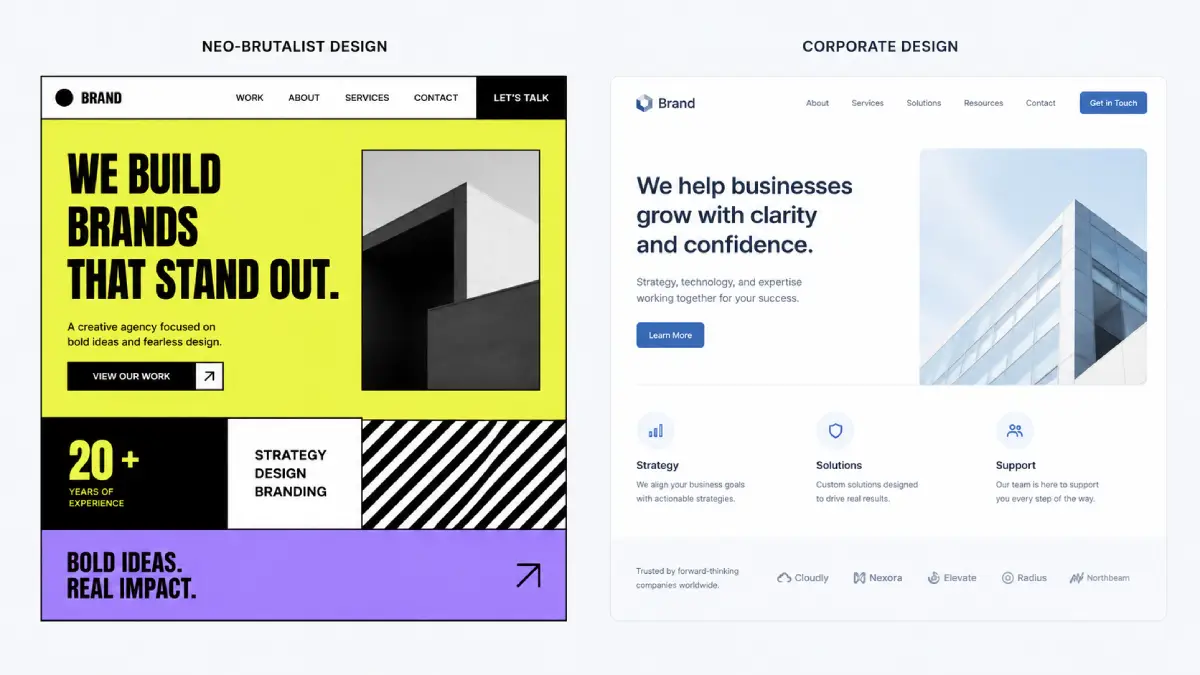
Neo-brutalism — bold typography, visible grid structures, high-contrast colour blocks — is genuinely one of 2026's most talked-about design trends, refined from earlier, rougher brutalist web design into something polished enough for commercial use. Kinetic typography, where headlines animate or respond to scroll and interaction, is showing up across high-end creative and consumer brand websites.
Both trends work well for brands built around personality and boldness — retail, hospitality, creative agencies. Industry design analysis is explicit that this aesthetic is "less appropriate for industries where trust and conservatism are valued," specifically naming healthcare, finance, and legal as examples. Qatar's corporate sector is dominated by exactly these categories — banking, energy, legal services, government-adjacent enterprises — where a website that looks experimental can quietly undercut the credibility it's trying to build.
What "Restrained but Modern" Looks Like for Finance, Legal, and Enterprise Brands
This doesn't mean corporate websites should look dated. Subtle kinetic typography — a headline that fades in with gentle upward motion on scroll, rather than text that stretches or rotates — brings a modern feel without sacrificing the seriousness these sectors need to project. The goal for a Qatar corporate site in 2026 is confidence without spectacle.
Performance and Accessibility Are Now Baseline, Not Bonus
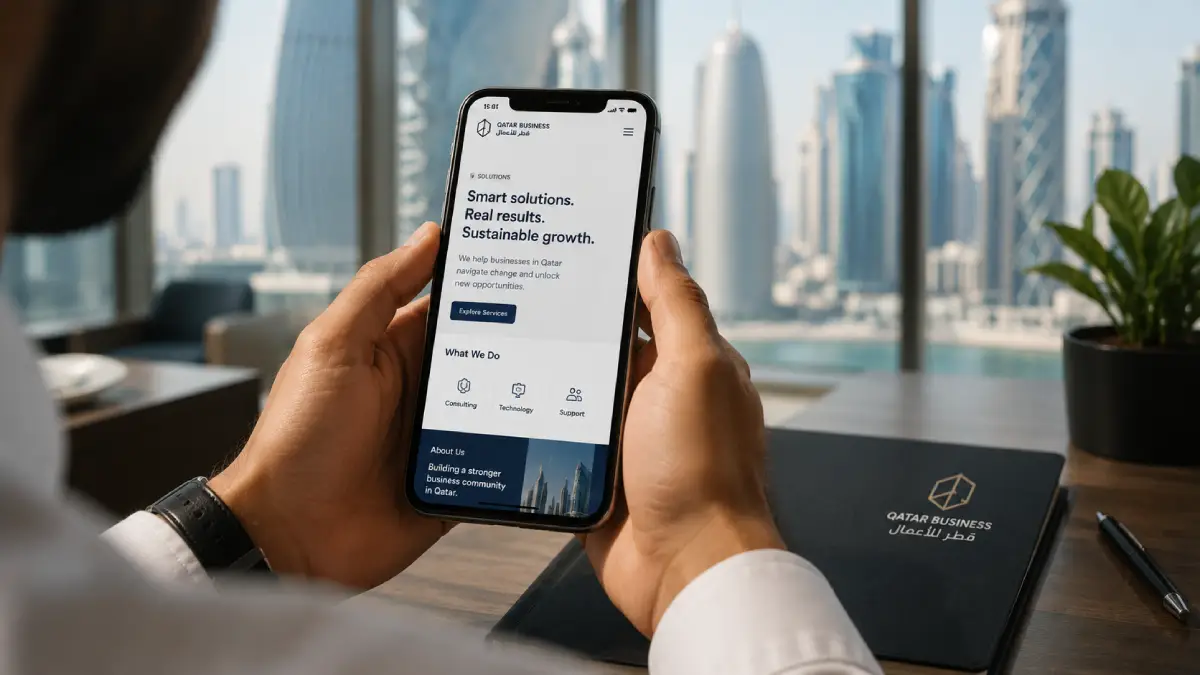
Mobile-First and "Thumb-Friendly" Design for Qatar's Smartphone-First Market
Qatar has internet penetration above 99 percent and one of the highest smartphone usage rates globally. A corporate website that hasn't been properly optimised for mobile — slow-loading pages, cramped navigation, forms that are painful to complete on a small screen — is turning away a large share of its actual audience, regardless of how impressive the desktop version looks.
Accessibility as Measurable Business Value, Not Just Compliance
Accessibility has moved from a "nice to have" to a baseline expectation in 2026 web design more broadly — high-contrast colour palettes, screen reader support, and full keyboard navigation are increasingly treated as standard practice rather than special accommodations. Industry benchmarking has associated accessibility-focused websites with measurably higher year-over-year traffic growth, suggesting this is a genuine business consideration, not only an ethical one.
Purposeful Motion and AI Personalisation — Used Carefully
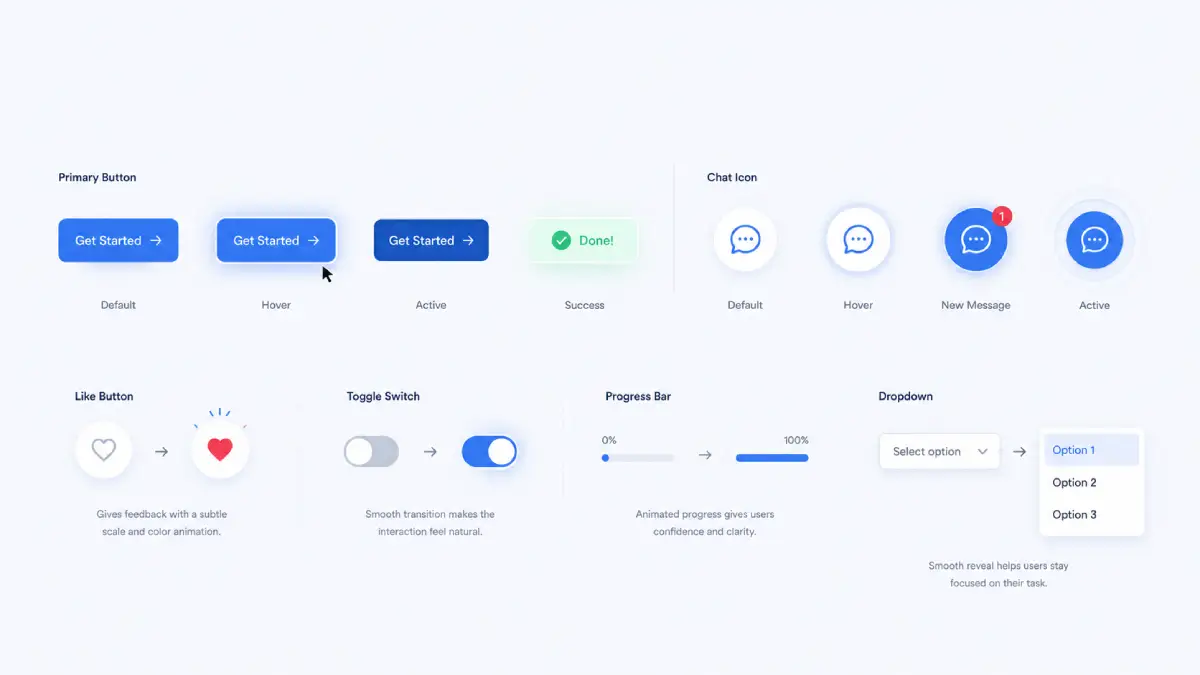
Micro-Interactions as Usability Infrastructure
Small, purposeful animations — a button that subtly changes on hover, content that fades in as you scroll, a confirmation animation after a form submits — are increasingly described in current design analysis as "usability infrastructure" rather than decoration. Used well, they guide attention and confirm actions without slowing the site down or feeling gimmicky.
Why Full AI Personalisation Is Still "Wait and Watch" for Most Qatar Businesses
AI-driven personalisation — adapting page content, layout, or recommendations in real time based on visitor behaviour — is a genuine 2026 trend, but current industry guidance is honest about its limits: full implementation is still complex and costly, and realistically remains a "wait and watch" category for most small and mid-size businesses rather than an immediate must-have. For most Qatar corporate websites, a well-designed adaptive chatbot handling common enquiries is a more practical starting point than full behavioural personalisation across the entire site.
WhatsApp and Direct Communication Are Still the Real Conversion Layer
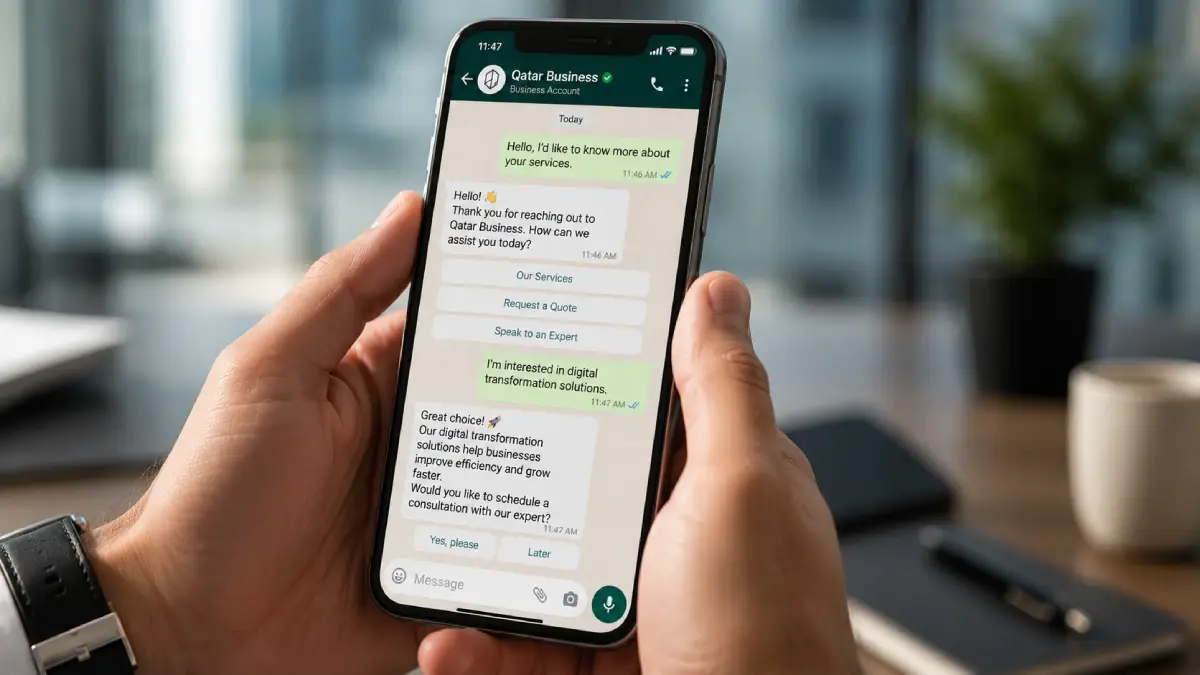
Beneath all the design trend conversation, one thing hasn't changed: WhatsApp remains the dominant everyday communication channel across Qatar, for B2B enquiries as much as consumer ones. A corporate website with a polished design but no direct, low-friction way to start a conversation — a WhatsApp link, a clear contact path, a simple enquiry flow — is still going to lose enquiries to a competitor who made that one step easier.
A Practical Checklist for Auditing Your Corporate Website
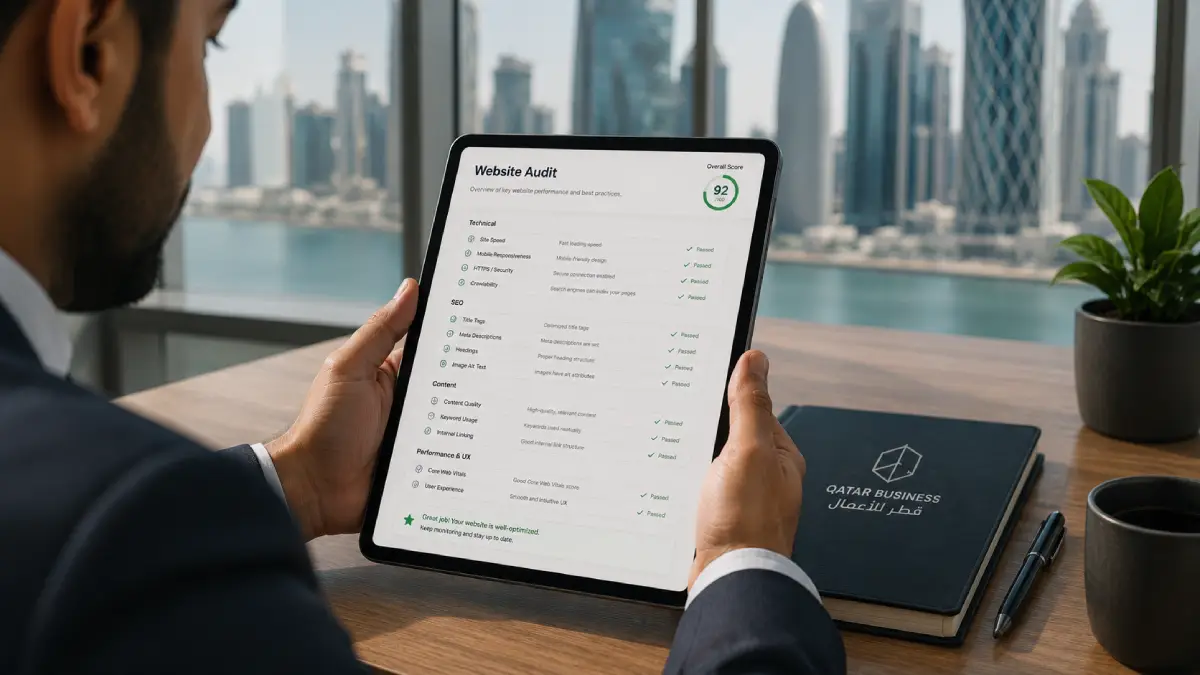
Rather than chasing every trend at once, it helps to check your current site against a few grounded questions:
- Does your website clearly and honestly explain how you handle visitor and customer data?
- Is your Arabic version a full RTL experience, or a translated overlay on an English template?
- Are your key pages structured with clear headings and genuine FAQ sections an AI tool could accurately summarise?
- Does your visual design match the level of trust your industry needs to project?
- Have you tested your site's speed and usability on an actual mobile phone, not just a desktop browser?
- Is there a direct WhatsApp or low-friction contact path visible on every key page?
| Trend | Recommended For | Caution |
|---|---|---|
| Bold, transparent data-handling communication | All corporate sectors, especially finance, legal, and government-adjacent business | Must be accurate — don't claim compliance you haven't actually verified |
| Full RTL Arabic design | All Qatar-facing corporate websites | Must extend beyond the homepage to forms, navigation, and documents |
| AEO-structured content (FAQs, direct answers) | All sectors seeking visibility in AI search tools | Structure must be genuine, not just superficially styled to look like FAQs |
| Neo-brutalism, kinetic typography | Retail, hospitality, creative, consumer-facing brands | Approach cautiously for finance, legal, healthcare, and enterprise brands |
| Purposeful micro-interactions | All corporate sectors | Must guide usability, not slow down page performance |
| Full AI-driven personalisation | Larger enterprises with budget for complex implementation | Still costly and complex; not yet essential for most SMEs |
The corporate websites that will perform best in Qatar in 2026 are not necessarily the boldest or most experimental — they are the ones that are fast, bilingual by design, structured for AI search, and honest about how they handle data.
How NammoraX Can Help
We build bilingual, performance-focused websites for the Qatar market, and we've written in detail about what a high-converting website in this market actually requires in our complete 2026 guide to building for Qatar's property sector — many of the same bilingual and mobile-first principles apply directly to corporate websites.
If your corporate website needs a refresh that balances modern design with the trust and credibility your sector requires, we offer website design and redesign services built around genuine RTL bilingual support, AEO-ready content structure, and mobile performance from the ground up.
About NammoraX
NammoraX is a digital marketing and web design agency headquartered in Puttur, Dakshina Kannada, Karnataka, working with businesses across India and internationally, including Qatar. Our work has included bilingual property platforms, custom web application development, and digital marketing for Doha-based businesses, giving us direct, verifiable experience with what actually works for websites serving Qatar's market.
Frequently Asked Questions
Does a Qatar corporate website need to display cybersecurity or privacy compliance information?
There's no blanket requirement to display a badge, but given NCSA's active role in enforcing PDPPL and promoting tools like the Cloud Computing Privacy Assessment Tool, clearly and honestly communicating your data handling practices is becoming a meaningful trust signal for Qatar's corporate audience.
Is Arabic still necessary for a corporate website in Qatar in 2026?
Yes. A full right-to-left Arabic version remains standard market expectation for corporate websites in Qatar, not a differentiator, and this hasn't changed with newer design trends.
What is AEO and why does it matter for my company's website?
AEO, or Answer Engine Optimization, refers to structuring website content so AI tools like Google AI Overviews, ChatGPT, and Perplexity can accurately summarise and cite it. It matters because a growing share of searches are now answered directly by AI without a click-through to the source website.
Should my corporate website use bold, trendy design or a more conservative look?
This depends heavily on your sector. Bold, experimental design trends like neo-brutalism work well for retail, hospitality, and creative brands, but industry guidance specifically cautions against them for finance, legal, healthcare, and similarly trust-sensitive sectors, which make up much of Qatar's corporate landscape.
Is AI personalization worth investing in for a mid-size Qatar company right now?
Full AI-driven personalisation is still considered complex and costly for most small and mid-size businesses. A well-designed chatbot handling common enquiries is typically a more practical starting point than site-wide behavioural personalisation.
How important is WhatsApp integration for a B2B corporate website?
Very important. WhatsApp remains the dominant communication channel in Qatar for both consumer and business enquiries, and a corporate site without a direct, low-friction contact path risks losing enquiries to competitors who make that step easier.
What's the biggest mistake corporate websites in Qatar make in 2026?
Treating bilingual support as a translated homepage rather than a genuine full-site RTL experience is one of the most common and most damaging mistakes, since it undermines the professionalism the rest of the site is trying to project.